Hello,
I am Arnaud Lazarus, an academic working at the interface of applied mathematics, physics and mechanical engineering. From 2013 to 2024, I served as an associate professor in the Department of Mechanical Engineering at Sorbonne Université, conducting research at the Institut Jean le Rond d'Alembert in Paris, France. Currently on leave from Sorbonne, I am a visiting researcher at MIT's Department of Mathematics and Harvard's School of Engineering and Applied Sciences in Cambridge, MA, USA.
With students and colleagues, I combine mathematics, numerical methods, and model experiments to investigate how physical systems become unstable, evolve, and self-organize, with a particular focus on mechanisms in which periodicity plays a decisive role. At the core of my work are linear differential equations with periodically varying coefficients, where I uncover unexpected connections between the linear algebra of classical Floquet systems and the formalism of quantum mechanics, revealing new principles for the analysis and design of engineered systems.
I apply and develop this Floquet framework across four core domains:
- Linear time-periodic systems: Harnessing parameter modulations to control parametric instabilities or achieve non-traditional dynamical stabilization.
- Stability of nonlinear dynamical systems: Using linearized Floquet theory to determine local stability and bifurcation thresholds of periodic orbits in nonlinear systems.
- Elastic buckling under spatially-varying stress: How a slender structure selects its buckling wavelength when the stress it carries varies periodically in space.
- Waves in space-time modulated media: Probing instabilities and band gap formation in metamaterials whose properties vary in both space and time.
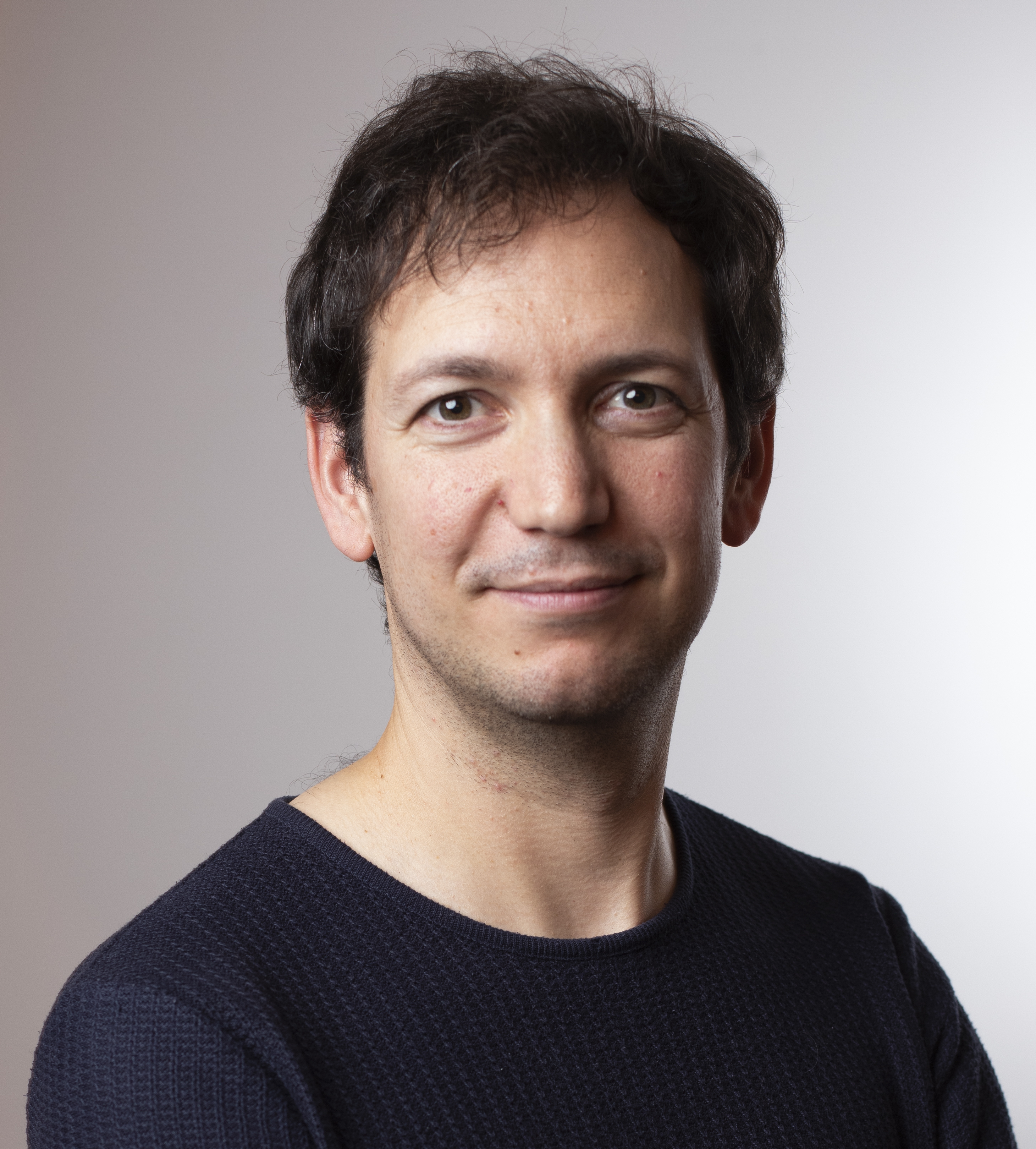
|
Arnaud Lazarus |
| Visiting Associate Professor | |
| Massachusetts Institute of Technology, Department of Mathematics, Building 2-173 182 Memorial Drive, Cambridge, MA 02139, USA |
|
| arnaud.lazarus(at)sorbonne-universite.fr | |
| alazarus(at)mit.edu |
A curriculum Vitae, updated on 04/25/2026, can be downloaded [here].
ORCID or Google scholar profile.